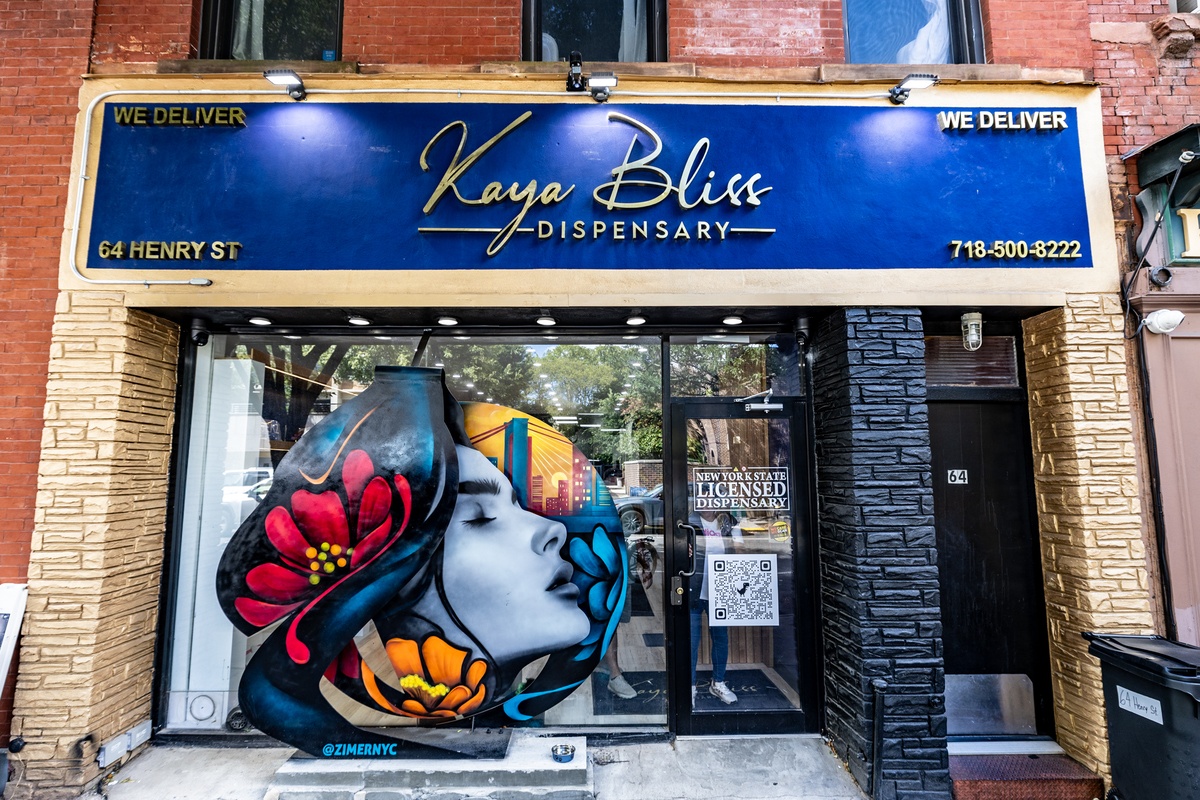
Kaya Bliss Brings Legal Cannabis to Brooklyn Heights, Brooklyn
Brooklyn Heights is a neighborhood known for its historic architecture, tree-lined streets, established businesses, and distinctive sense of community. As New York’s legal cannabis industry continues to develop, neighborhoods like Brooklyn Heights are also becoming part of a changing retail landscape.
For Kaya Bliss Dispensary, expanding into Brooklyn Heights represented an opportunity to introduce its customer-focused cannabis retail experience to another Brooklyn community.
Located at 64 Henry Street in Brooklyn, NY 11201, Kaya Bliss’s Brooklyn Heights dispensary brings the company’s emphasis on product education, professional service, and a welcoming atmosphere to an area recognized for its historic character.
The journey to establishing the location attracted public attention, including conversations about neighborhood preservation, storefront design, and the role of licensed cannabis businesses in established residential communities.
These discussions became an important part of the location’s story.
By opening in Brooklyn Heights, Kaya Bliss continued building on the vision that began with its original Bay Ridge dispensary: providing adults with access to regulated cannabis products in a comfortable and approachable retail setting.
Expanding the Kaya Bliss Experience Beyond Bay Ridge
Kaya Bliss first established its presence in Brooklyn through its Bay Ridge dispensary, which opened in January 2025.
As the first licensed adult-use cannabis dispensary in Bay Ridge, the original location introduced the company to customers while helping its founders gain experience operating within New York’s developing cannabis marketplace.
The Brooklyn Heights location represented the next chapter in that growth.
For founders Edgar Kleydman and Giorgio Matesi, expanding into another neighborhood created an opportunity to reach additional customers while continuing to develop the Kaya Bliss brand.
Although Bay Ridge and Brooklyn Heights have different characteristics, both are established communities with active local business environments.
That makes neighborhood awareness an important consideration for any retailer entering these markets.
Kaya Bliss’s expansion was not simply about opening another storefront. It involved introducing the company’s retail philosophy to a new customer base and demonstrating how a licensed cannabis dispensary could operate within an existing commercial district.
Why Brooklyn Heights Is a Unique Location
Brooklyn Heights occupies a distinctive place within New York City.
The neighborhood is recognized for its historic brownstones, residential streets, cultural landmarks, and proximity to Downtown Brooklyn.
Its commercial areas serve residents, professionals, and visitors who appreciate the neighborhood’s combination of historic character and convenient access to the rest of the borough.
Henry Street is an important part of this environment.
Businesses located along the street operate within a neighborhood where architecture, storefront appearance, and community identity are significant considerations.
For a cannabis dispensary, entering this setting requires attention to more than product selection.
It also involves understanding how a new retail business will interact with neighboring properties, pedestrians, residents, and existing commercial activity.
Kaya Bliss’s Brooklyn Heights location became part of a broader conversation about how modern businesses can operate within historically significant neighborhoods.
The Story Behind 64 Henry Street
Before Kaya Bliss established its presence at 64 Henry Street, the property had already attracted attention in local reporting.
A February 2025 article discussed plans for a licensed cannabis business at the location and described the property’s controversial history.
The proposed dispensary prompted discussion among community representatives, including concerns expressed by the Brooklyn Heights Association.
These conversations reflected the complicated relationship between New York’s developing cannabis industry and neighborhoods that place significant importance on local character.
For Kaya Bliss, the location offered an opportunity to operate a legitimate, regulated retail business in a space that had previously been the subject of negative attention.
A New Chapter for an Established Property
Commercial properties can undergo significant changes as neighborhoods evolve.
A storefront that previously housed one type of operation may later become a restaurant, specialty retailer, professional office, or another type of business.
These transitions can generate discussion, particularly when the proposed use is unfamiliar or controversial.
In the case of 64 Henry Street, the prospect of a licensed cannabis dispensary introduced questions about the property’s future.
Kaya Bliss approached the location with the intention of establishing a professionally operated retail environment.
Unlike an unlicensed cannabis seller, a licensed dispensary must follow state requirements governing its operations.
These requirements provide a regulatory framework for the business and its customers.
Addressing Neighborhood Concerns
The introduction of cannabis retail into established communities can generate a variety of reactions.
Some residents welcome the convenience of having a licensed dispensary nearby.
Others raise questions about security, neighborhood character, storefront design, or the potential impact on surrounding businesses.
Kaya Bliss’s proposed Brooklyn Heights location was no exception.
Local coverage documented concerns from neighborhood representatives during the planning process.
These discussions illustrated the importance of communication when a new business enters a community with strong expectations about development and preservation.
Understanding the Difference Between Licensed and Unlicensed Cannabis Retail
One important part of the conversation involves understanding how New York regulates legal cannabis businesses.
Licensed adult-use cannabis dispensaries operate under rules established by the New York State Office of Cannabis Management.
These regulations address matters such as product sourcing, testing, labeling, security, and age verification.
Customers must be at least 21 years old to purchase adult-use cannabis.
Licensed businesses are also required to follow applicable restrictions on marketing and retail operations.
These standards distinguish regulated cannabis retailers from businesses operating outside the legal marketplace.
For customers and community members, understanding these differences provides useful context when evaluating the arrival of a new dispensary.
Building Trust Through Responsible Operations
Community trust develops through consistent actions rather than opening-day announcements.
For any neighborhood business, maintaining a professional storefront, respecting surrounding properties, and communicating responsibly are important parts of long-term operations.
Cannabis dispensaries face additional expectations because they operate in a regulated industry.
Kaya Bliss’s customer-focused approach emphasizes a comfortable retail setting where adults can ask questions and explore products through legal channels.
That approach is particularly relevant in neighborhoods where residents may have limited familiarity with licensed cannabis retail.
Historic Preservation and Modern Retail Design
Another important aspect of the Brooklyn Heights story involved the appearance of the storefront.
In July 2025, local reporting described concerns about decorative elements associated with the proposed dispensary, including colorful sculpture and gold-colored exterior features.
The discussion involved the Landmarks Preservation Commission and reflected the neighborhood’s sensitivity to architectural changes.
Brooklyn Heights has a long history of preservation efforts intended to protect its distinctive streetscapes and historic buildings.
For businesses operating in such areas, storefront design can become a significant consideration.
Balancing Business Identity With Neighborhood Character
Retail businesses use signage, colors, lighting, and design elements to communicate their identity.
These features help customers recognize a location and distinguish it from neighboring businesses.
In historic districts, however, exterior changes may be subject to additional review and preservation requirements.
The challenge is finding an appropriate balance between a business’s visual identity and the architectural context of its surroundings.
Kaya Bliss’s Brooklyn Heights project highlighted this broader issue.
The public discussion was not solely about cannabis. It also concerned how a contemporary retailer should present itself within a historic neighborhood.
These questions are relevant to many types of businesses, including restaurants, boutiques, and specialty shops.
The experience illustrates why understanding local requirements and community expectations is an important part of retail development.
Creating an Approachable Cannabis Dispensary in Brooklyn Heights
Beyond the public discussion surrounding its location, Kaya Bliss’s goal has been to provide a welcoming shopping environment for adults interested in legal cannabis.
A licensed dispensary should make it easy for customers to understand what is available and how to evaluate different products.
That begins with organized product categories and access to knowledgeable staff.
Cannabis Education for Different Experience Levels
Cannabis customers do not all have the same level of familiarity with the products available.
Some have extensive experience with flower, edibles, and other formats.
Others may be visiting a licensed dispensary for the first time.
Kaya Bliss emphasizes an approachable environment where customers can ask questions about product categories, packaging information, and available options.
This is particularly important because products can differ substantially in THC content, serving size, ingredients, and method of use.
Employees can explain general differences and help shoppers locate product information without making unsupported medical claims.
Exploring Available Cannabis Products
Kaya Bliss offers a selection of cannabis product categories, subject to inventory.
Customers may find cannabis flower, pre-rolls, edibles, vape products, concentrates, tinctures, topicals, and accessories.
Each category has different characteristics.
Flower and pre-rolls are inhalable products, while edibles are consumed orally and may have a delayed onset of effects.
Tinctures, concentrates, and other formats have their own product-specific considerations.
Customers should review labels carefully and follow responsible-use guidance.
The current online menu provides the most accurate information about available products.
Supporting the Growth of Legal Cannabis in Brooklyn
The opening of licensed dispensaries across Brooklyn reflects the continuing development of New York’s regulated cannabis marketplace.
For consumers, legal retail locations provide access to products sold within the state’s regulatory framework.
For neighborhoods, these businesses represent a relatively new category of retail.
Their integration into established commercial areas requires attention to both regulatory compliance and local relationships.
Kaya Bliss’s experience in Brooklyn Heights demonstrates how those considerations can intersect.
The company entered a neighborhood with a strong architectural identity and an active interest in how new businesses operate.
The discussions surrounding its arrival became part of the larger story of legal cannabis retail in New York City.
Visit Kaya Bliss in Brooklyn Heights
Kaya Bliss’s Brooklyn Heights dispensary is located at 64 Henry Street, Brooklyn, NY 11201.
The location serves adults aged 21 and older who are interested in exploring cannabis products through a licensed New York retailer.
Visitors can browse the current product selection online or stop by the dispensary to learn more about available categories.
The Brooklyn Heights location builds on the company’s original vision of combining cannabis retail with product education, knowledgeable service, and a welcoming atmosphere.
From discussions about historic preservation to the everyday responsibilities of operating a regulated business, Kaya Bliss’s journey into Brooklyn Heights reflects the opportunities and complexities of modern cannabis retail.
As the company continues serving Brooklyn communities, its focus remains on creating accessible, professional shopping experiences while respecting the neighborhoods in which it operates.